Korean Beef Rice Bowls
Korean Beef Rice Bowls: A Warm Bowl to Gather Around
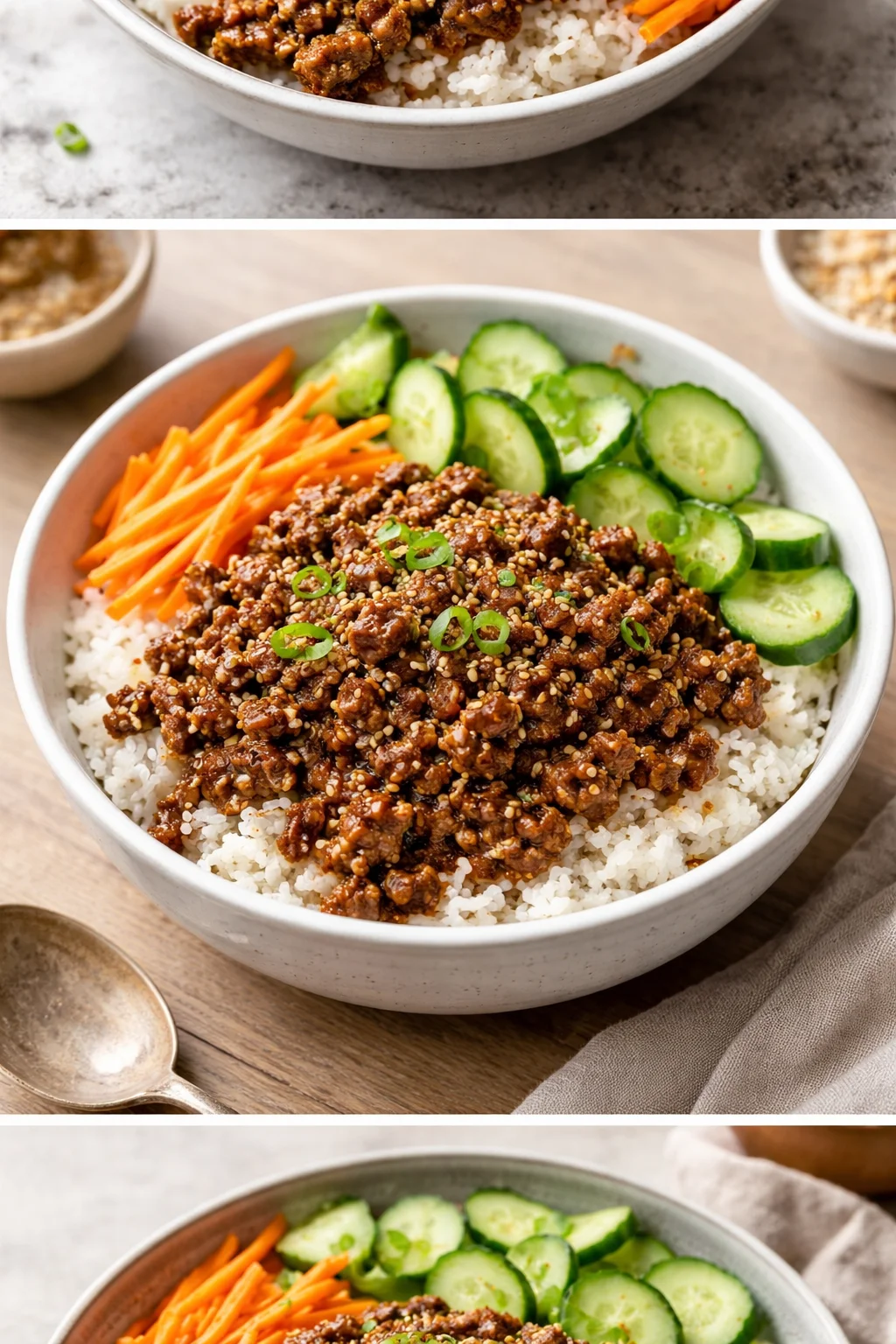
There are smells that snap you back to the best kind of evening — garlic sizzling, soy caramelizing, a bright scatter of sesame seeds — and that memory is exactly what Korean Beef Rice Bowls deliver. This homemade meal feels like a cozy hug from the inside: sweet and savory beef spooned over steaming rice, quick pickled vegetables for brightness, and a drizzle of spicy sauce if you like a little kick. Whether you need a quick dinner idea on a weeknight, a comforting family recipe for Sunday, or a festive treat for guests, these bowls are easy, joyful, and impossible not to love.
Why You’ll Love Korean Beef Rice Bowls
- Big flavor with minimal fuss: savory, sweet, and a touch of heat in under 30 minutes.
- Crowd-pleasing and budget-friendly: ground beef stretches far and satisfies many appetites.
- Versatile: serve it as a healthy option with extra veggies or as an indulgent dessert standby with a kimchi side for contrast.
- Make-ahead friendly: components can be prepped in advance for fast assembly.
- Perfect as a quick dinner idea or a comforting, festive treat when you want something special but simple.
Ingredients for Korean Beef Rice Bowls
- 1 pound ground beef (85/15 is ideal for flavor) — swap for ground turkey for a leaner, healthy option.
- 3 tablespoons soy sauce (use low sodium to control salt).
- 2 tablespoons brown sugar or honey for a deeper sweetness.
- 1 tablespoon sesame oil for rich, toasty aroma.
- 3 cloves garlic, minced — the foundation of that warm scent.
- 1 teaspoon fresh ginger, grated (optional, but bright and fresh).
- 1/2 teaspoon red pepper flakes or 1 tablespoon gochujang for heat.
- 1 small onion, finely chopped.
- 2 green onions, sliced for garnish.
- Sesame seeds, toasted, for finishing.
- 4 cups cooked short-grain rice (white or brown).
- Quick pickles: 1/2 cucumber, thinly sliced with 1 tablespoon rice vinegar and pinch of sugar.
- Optional extras: steamed spinach, sautéed mushrooms, shredded carrots, or a fried egg for a more indulgent, brunch-like twist.
Substitution notes: swap spinach with kale for a stronger flavor, or replace brown sugar with maple syrup for a deeper, woodsy sweetness.
Prep and Cook Time for Korean Beef Rice Bowls
- Prep time: 10 minutes (plus 20 minutes if you cook rice from scratch).
- Cook time: 10 to 12 minutes.
- Total time: about 25 minutes (or 45 minutes if you include rice cooking).
This is a true quick dinner idea, and it also plays well as a make-ahead weekday lunch.
Step-by-Step Instructions for Korean Beef Rice Bowls
- Cook the rice: Rinse rice until water runs clear and cook according to package directions so it is steaming and slightly sticky when you’re ready to serve. The aroma of hot rice is the first invitation to dig in.
- Make the quick pickles: Toss cucumber slices with rice vinegar and a pinch of sugar, let sit while you cook. The pickles add bright crunch against the rich beef.
- Sauté aromatics: Heat a large skillet over medium-high heat. Add sesame oil; when it shimmers, add chopped onion and cook until softened and translucent, about 3 minutes. Add garlic and ginger and cook until fragrant — you will smell the heady garlic warming the air.
- Brown the beef: Increase heat to high and add ground beef. Break it up with a spatula and let it get some golden edges — those caramelized bits are flavor gold. Cook until no longer pink, about 5 minutes.
- Add the sauce: Stir in soy sauce, brown sugar, and red pepper flakes or gochujang. Reduce heat and let the liquid thicken slightly, spooning it over the beef so each bite is glossy and savory. Taste and adjust: a splash of rice vinegar or squeeze of lime brightens if it feels too sweet.
- Finish and garnish: Stir in sliced green onions, scatter toasted sesame seeds, and remove from heat. If you love an indulgent touch, top each bowl with a runny fried egg so the yolk creates a silky sauce when pierced.
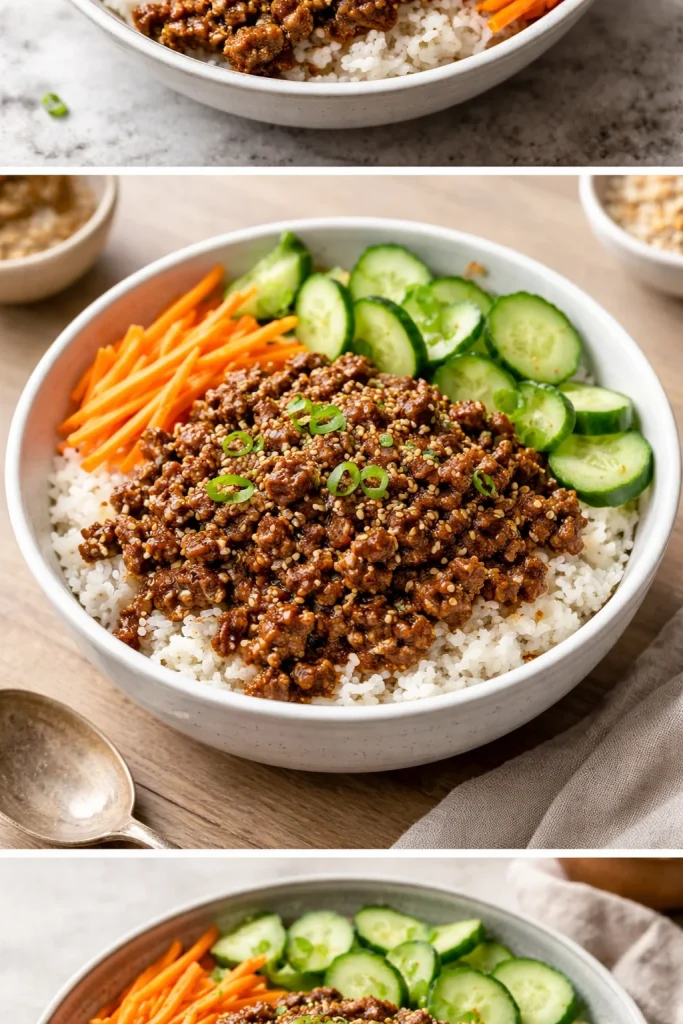
- Assemble bowls: Spoon rice into bowls, mound the Korean beef on top, add quick pickles and any steamed greens, then garnish with extra green onions and sesame seeds. Serve immediately and watch everyone tuck in.
Variations and Twists for Korean Beef Rice Bowls
- Healthy option: Use lean ground turkey and double the vegetables — shredded cabbage and carrot make it a colorful bowl.
- Spicy kick: Mix gochujang with a little honey and sesame oil for a gochujang glaze.
- Festive treat: Add roasted sweet potatoes and kimchi for a holiday bowl with depth and contrast.
- Regional spin: Swap rice for cauliflower rice for a low-carb twist, or serve in lettuce cups for a light, family recipe-style picnic.
- Comfort food upgrade: Stir in a pat of butter to the hot rice before assembling for extra richness.
Serving Suggestions for Korean Beef Rice Bowls
Plate these bowls with contrasting textures: crisp quick pickles, silky egg yolk, and crunchy green onions. Pair with steamed broccoli or a simple miso soup for an Asian-inspired spread, or set up a “build-your-own” bowl bar for a casual dinner party where everyone customizes toppings. For a family recipe vibe, let children add their own garnishes — it turns dinner into a shared, cheerful ritual.

Storage and Reheating for Korean Beef Rice Bowls
Store leftovers in airtight containers for up to 3 days in the refrigerator. Keep rice and beef together or separate for best texture. Reheat gently on the stovetop over low heat with a splash of water to loosen the sauce, or microwave covered in 30-second bursts. Do not freeze rice-only bowls; freeze the beef for up to 2 months in a freezer-safe container and thaw overnight before reheating.
Kitchen Tips for Success with Korean Beef Rice Bowls
- Toast sesame seeds in a dry pan until fragrant to maximize their nutty flavor.
- Let the beef brown undisturbed for a minute at a time to build caramelization.
- Taste as you go — balance sweet, salty, and sour with tiny adjustments of soy, sugar, and vinegar.
- Use hot, freshly cooked rice for the best texture and contrast with the saucy beef.
- If using gochujang, dilute it slightly with warm water so it mixes smoothly into the sauce.
FAQs
Q: Can I make this recipe gluten-free?
A: Yes. Use tamari or a certified gluten-free soy sauce to keep the flavors intact.
Q: Can I prep this ahead for meal prep?
A: Absolutely. Cook the beef and rice, cool completely, and portion into containers. Add quick pickles the morning you eat for the freshest crunch.
Q: How spicy is this?
A: Mild by default if you use red pepper flakes; add more gochujang or a fresh chili for a bolder heat.
Q: What is the serving size?
A: This recipe serves 4 as a main course when paired with rice and sides.
Q: Can I use pre-ground beef?
A: Yes, any ground beef works. Choose a higher fat content for more flavor and juiciness.
Conclusion
There is a special kind of comfort in assembling a bowl that is equal parts quick and soulful, and Korean Beef Rice Bowls deliver that every time — a perfect homemade meal that becomes a family recipe passed around the table. If you love the idea of a savory, caramelized beef topping for rice and want another trusted take on these flavors, take a look at this lovely variation for inspiration: Korean Ground Beef and Rice Bowls – The Recipe Critic. Cook, share, and let the little everyday rituals of feeding each other become the memories you savor.
Korean Beef Rice Bowls
Ingredients
Method
- Rinse rice until water runs clear and cook according to package directions.
- Toss cucumber slices with rice vinegar and a pinch of sugar. Let sit while you cook.
- Heat a large skillet over medium-high heat. Add sesame oil; when it shimmers, add chopped onion and cook until softened.
- Add garlic and ginger and cook until fragrant.
- Increase heat to high and add ground beef. Break it up with a spatula and let it brown until no longer pink.
- Stir in soy sauce, brown sugar, and red pepper flakes or gochujang. Reduce heat and let thicken slightly.
- Stir in sliced green onions and remove from heat.
- Top bowls with a runny fried egg if desired.
- Spoon rice into bowls, mound the Korean beef on top, add quick pickles and any steamed greens.
- Garnish with extra green onions and sesame seeds. Serve immediately.