Korean Chicken Breasts — A Cozy, Flavor-Packed Weeknight Winner
Warm Memories with Korean Chicken Breasts
The first time I made Korean Chicken Breasts, the kitchen smelled like a travel memory I had not yet earned — sweet soy, warm toasted sesame, and the bright sting of garlic and ginger. That aroma wrapped around my family like a soft blanket, and suddenly this homemade meal felt like a little celebration. Korean Chicken Breasts is a quick dinner idea that bridges comfort food and a healthy option, and it’s easy enough to become a trusted family recipe.
Why You’ll Love Korean Chicken Breasts

- Deep, balanced flavor: sweet, salty, tangy, and slightly spicy all at once.
- Fast and fuss-free: ready in about 30 minutes — perfect as a quick dinner idea on busy nights.
- Crowd-pleasing and budget-friendly: simple ingredients that stretch to feed a crowd.
- Healthy option: lean chicken breasts get a flavor boost without heavy breading.
- Versatile: serve as a weeknight main, a festive treat for guests, or a make-ahead lunch.
Ingredients
- 4 boneless, skinless chicken breasts (about 1 1/2 pounds) — pat dry for better browning.
- 3 tablespoons soy sauce (or tamari for gluten-free) — adds umami.
- 2 tablespoons brown sugar (or honey) — balances the soy sauce with warm sweetness.
- 1 1/2 tablespoons rice vinegar (or apple cider vinegar) — brightens the sauce.
- 1 tablespoon gochujang (Korean chili paste) or 1 teaspoon red pepper flakes for heat — add more or less to taste.
- 2 cloves garlic, minced — fragrant and essential.
- 1 teaspoon grated fresh ginger — gives a clean spice note.
- 1 tablespoon sesame oil — nutty finish.
- 1 tablespoon vegetable oil (for the pan) — neutral cooking oil.
- 1 teaspoon cornstarch mixed with 2 teaspoons water (optional, for thickening).
- Sesame seeds and sliced green onions, for garnish.
Substitutions and notes: swap chicken breasts for thighs if you want juicier meat; use honey instead of brown sugar for a floral sweetness; replace rice vinegar with lime juice for an unexpected citrus lift. This can be a festive treat when plated with pickled veggies and steamed rice or a simpler homemade meal with a side salad.
Prep and Cook Time
- Prep time: 10 minutes
- Cook time: 15–20 minutes
- Total time: 25–30 minutes
This recipe is a quick dinner idea that also works for make-ahead lunches — marinate the chicken in the morning, cook in the evening.
Step-by-Step Instructions for Korean Chicken Breasts
- Make the sauce: In a small bowl, whisk together soy sauce, brown sugar, rice vinegar, gochujang (or red pepper flakes), minced garlic, grated ginger, and sesame oil. Taste and adjust the sweet, salty, and spicy balance.
- Marinate briefly: Place chicken breasts in a shallow dish or zip-top bag and pour half the sauce over them. Let them marinate for 10–30 minutes at room temperature (or up to 4 hours in the refrigerator). Even a short marinate will add flavor.
- Preheat the pan: Heat one tablespoon of vegetable oil in a large skillet over medium-high heat until shimmering. The pan should be hot enough that the chicken sizzles on contact.
- Sear the chicken: Remove chicken from the marinade (reserve the liquid). Sear the breasts for 3–4 minutes per side until a golden crust forms. Lower the heat if the exterior browns too quickly.
- Finish cooking with sauce: Pour the reserved marinade and a splash of water into the pan. Cover and reduce heat to medium-low. Cook for another 6–8 minutes, turning once, until the internal temperature reaches 165°F (74°C).
- Thicken if needed: If you prefer a glossy, clingy sauce, stir the cornstarch slurry into the pan. The sauce will bubble and thicken in about 30 seconds, clinging to the chicken with a delicious sheen.
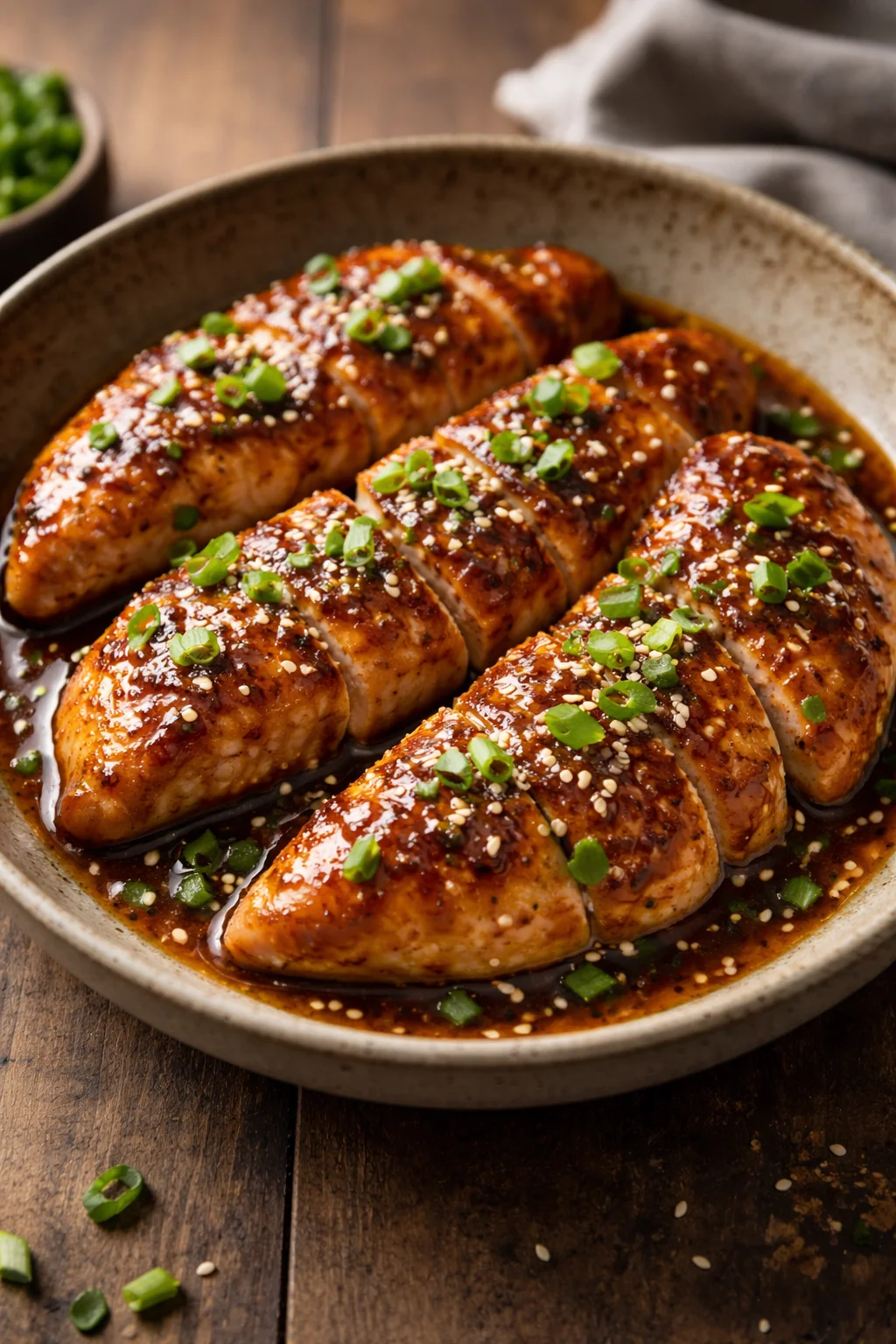
- Rest and slice: Transfer the chicken to a cutting board and let it rest for 5 minutes. Slice against the grain into medallions and spoon the sauce over the top. Sprinkle with toasted sesame seeds and sliced green onions.
Variations and Twists
- Healthier swap: use low-sodium soy and skip the sugar, or sub in maple syrup for a more natural sweetener.
- Oven-baked option: bake at 425°F (220°C) for 18–22 minutes, brushing with sauce halfway through for caramelization.
- Festive version: double the sauce, grill the breasts, and serve on skewers with charred pineapple and bell pepper.
- Regional spin: add a spoonful of miso for deeper umami, or finish with a squeeze of lime for Southeast Asian brightness.
- Make it a bowl: serve sliced chicken over rice or cauliflower rice with pickled carrots, cucumber, and a soft-boiled egg for a full meal.
Serving Suggestions
Serve Korean Chicken Breasts over steaming white rice, jasmine rice, or a bed of greens for a lighter plate. For cozy family dinners, place it on a platter so everyone can help themselves — the glossy sauce and scallions make for a beautiful centerpiece. For a festive treat, pair with kimchi pancakes, simple cucumber salad, and a cold beer or sparkling tea. This is also a lovely homemade meal for lunch boxes: slice and pack with rice and quick-pickled vegetables.
Storage and Reheating
- Refrigerator: Store cooled chicken in an airtight container for up to 3 days.
- Freezing: Freeze the cooked chicken and sauce separately in freezer-safe containers for up to 2 months. Thaw overnight in the refrigerator before reheating.
- Reheating: Reheat gently in a skillet over medium-low with a splash of water to loosen the sauce, or microwave in short bursts to avoid drying. Add a drizzle of sesame oil or a pat of butter to refresh the flavor and texture.
Kitchen Tips for Success
- Dry the chicken before searing — it helps form a beautiful crust and prevents steaming.
- Taste the sauce before using — you can balance salty, sweet, and heat to your family’s preference.
- Don’t overcook: use a thermometer or check for a slight give; chicken continues to cook while resting.
- Toast the sesame seeds in a dry pan first for a deeper nutty aroma.
- If using gochujang for the first time, start small — it adds heat and fermented depth.
FAQs
Q: Can I use chicken thighs instead of chicken breasts?
A: Yes — thighs stay juicier and work beautifully. Reduce the cooking time slightly if using boneless thighs.
Q: Is this recipe spicy?
A: It depends on your gochujang or red pepper amount. Start mild and add more at the end if you want more heat.
Q: Can I meal prep this?
A: Absolutely. Marinate on Sunday and cook midweek, or cook in advance and reheat for quick lunches.
Q: How many servings does this make?
A: Four moderate servings; adjust by adding sides for a larger group.
Q: Can I grill this instead of pan-searing?
A: Yes. Oil the grates and grill over medium-high, brushing with sauce and watching for flare-ups.
Conclusion
Korean Chicken Breasts has a way of turning a simple night into something memorable — the kind of family recipe you’ll pass along because it warms the belly and the heart. If you want a riff on this idea or inspiration for variations, you might enjoy the original take on Korean grilled chicken for ideas and technique: Korean Chicken – Skinnytaste. Now tie on your apron, put a pot of rice on the stove, and let the sweet-salty-slightly-spicy comfort of this dish bring everyone to the table.
Korean Chicken Breasts
Ingredients
Method
- In a small bowl, whisk together soy sauce, brown sugar, rice vinegar, gochujang (or red pepper flakes), minced garlic, grated ginger, and sesame oil. Taste and adjust the sweet, salty, and spicy balance.
- Place chicken breasts in a shallow dish or zip-top bag and pour half the sauce over them. Let them marinate for 10–30 minutes at room temperature (or up to 4 hours in the refrigerator).
- Heat one tablespoon of vegetable oil in a large skillet over medium-high heat until shimmering.
- Remove chicken from the marinade (reserve the liquid). Sear the breasts for 3–4 minutes per side until a golden crust forms.
- Pour reserved marinade and a splash of water into the pan. Cover and reduce heat to medium-low. Cook for another 6–8 minutes, turning once, until the internal temperature reaches 165°F (74°C).
- If desired, stir the cornstarch slurry into the pan to thicken the sauce.
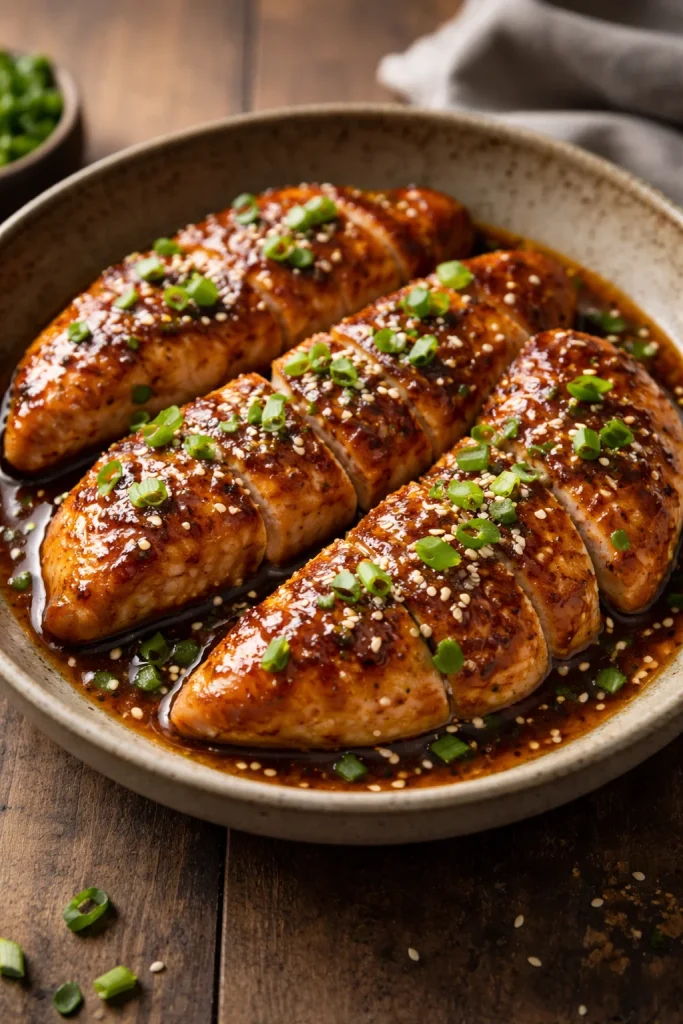
- Transfer the chicken to a cutting board and let it rest for 5 minutes. Slice against the grain into medallions and spoon the sauce over the top. Sprinkle with toasted sesame seeds and sliced green onions.