Traditional King Cake: A Warm, Cinnamon-Sweet Family Recipe
A Warm Welcome: Traditional King Cake
There is a smell that can teleport you to childhood—yeast rising, butter melting, sugar caramelizing—and in my kitchen that smell means one thing: Traditional King Cake is baking. This recipe is a cozy, festive treat that reads like a family recipe passed down through folds of powdered sugar and purple, green, and gold sprinkles. In the first hundred words I want you to feel the soft pull of dough between your fingers and the promise of a slice big enough to share. If you love homemade meal memories and comforting family recipe moments, you might also enjoy pairing flavors with an apple pecan cake I adore, like this apple pecan cake with caramel glaze for a layered dessert table.

Why You’ll Love This Traditional King Cake Recipe
- It tastes like celebration: warm cinnamon, vanilla, and a light citrus glaze.
- Crowd-pleasing and indulgent dessert that works for brunch, holiday parties, or a cozy Sunday.
- Budget-friendly: mostly pantry staples that transform into something special.
- Make-ahead friendly: you can prep dough the day before or freeze baked rings.
- Feels like comfort food and a homemade meal that doubles as a festive treat.
Ingredients
- 1 cup whole milk, warmed (about 110°F) — swap for almond milk for a lighter, healthy option.
- 2 1/4 teaspoons active dry yeast (1 packet)
- 1/2 cup granulated sugar
- 1/2 cup unsalted butter, softened (plus extra for brushing)
- 2 large eggs, room temperature
- 4 cups all-purpose flour, plus more for dusting (use half whole wheat for a wholesome twist)
- 1 teaspoon salt
- 1 teaspoon vanilla extract
- 1 tablespoon orange zest (or lemon for a different citrus note)
- Filling: 1/2 cup brown sugar, 2 tablespoons ground cinnamon, 1/4 cup softened butter, 1/2 cup chopped pecans (optional)
- Glaze: 1 to 1 1/2 cups powdered sugar, 2 to 3 tablespoons milk, 1/2 teaspoon vanilla, a squeeze of orange juice
- Decorating sugars: purple, green, and gold sprinkles (or any colors you love)
- Optional: a small plastic baby or dried bean to hide inside (tradition!)
Notes: For a healthier option, reduce sugar slightly and use light butter or a butter substitute. For an indulgent dessert, add cream cheese to the glaze.
Prep and Cook Time
- Prep time: 30 minutes active (plus 1–2 hours rising)
- Cook time: 20–25 minutes
- Total time: 2 to 3 hours (including rising)
This is not a quick dinner idea, but it’s a worthwhile, make-ahead celebration bread you’ll savor.
Step-by-Step Instructions for Traditional King Cake
- Warm the milk gently until it feels warm to the wrist, not hot. Stir in the yeast and a pinch of sugar, and let it sit 5 to 10 minutes until foamy—this is the little life sign of your dough.
- In a mixing bowl, beat the softened butter and sugar until light and creamy. Add eggs one at a time and then stir in vanilla and orange zest. The batter will smell bright and buttery here.
- Add the foamy yeast mixture to the butter mixture. Gradually add flour and salt, mixing until a soft dough forms.
- Turn the dough onto a floured surface and knead about 8 minutes until smooth and elastic. The dough should be soft, slightly tacky, and spring back when poked.
- Place the dough in a greased bowl, cover with a clean towel, and let it rise in a warm spot until doubled—about 1 to 2 hours. You will notice a pleasant yeasty, slightly sweet aroma filling the kitchen.
- While the dough rises, mix the filling: brown sugar, cinnamon, softened butter, and pecans. The mixture should be spreadable, like a paste.
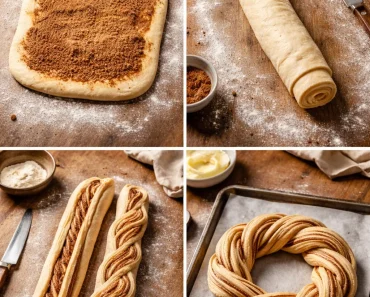
- Once risen, roll the dough into a rectangle about 12 by 18 inches. Spread the cinnamon filling evenly, leaving a small border.
- Roll the dough tightly from the long side into a log. Pinch the seam to seal.
- Form the log into a ring, pressing ends together, and place on a parchment-lined baking sheet. If you want to hide the baby, slip it into the dough seam before sealing.
- Cover and let the ring rise another 30 to 45 minutes until puffy.
- Preheat the oven to 350°F (175°C). Brush the top gently with melted butter.
- Bake 20 to 25 minutes or until golden brown and hollow-sounding when tapped. The butter will bubble at the edges and release a nutty aroma that makes it impossible to wait.
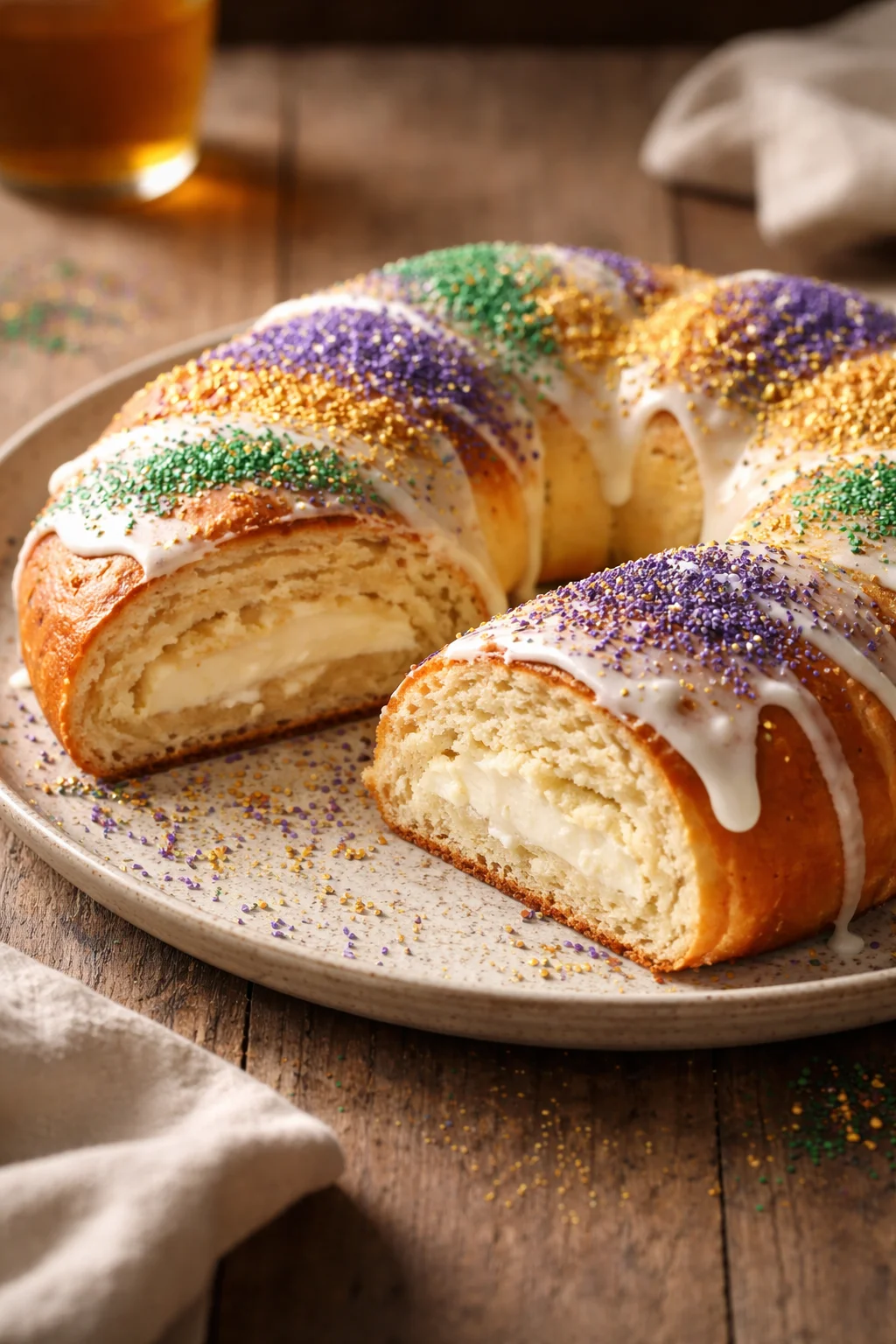
- Cool slightly on a rack. Whisk glaze ingredients until smooth and pour over the warm ring. Scatter colored sugars immediately so they stick to the glaze.
- Slice and serve warm or at room temperature.
Variations and Twists
- Healthy option: use half whole wheat flour and reduce sugar by 25 percent; swap butter for coconut oil.
- Indulgent dessert: spread a layer of cream cheese filling under the cinnamon mix for a richer bite.
- Regional spin: add orange liqueur to the glaze for a boozy New Orleans nod.
- Festive treat: swap sprinkles for edible flowers for a spring twist or chocolate drizzle for a modern twist.
- Savory twist: omit sugar and fill with herbed cream cheese and ham for a quick savory brunch ring.
Serving Suggestions
Serve slices warm with coffee for a cozy morning or bring the ring to a potluck and watch it disappear. Pair the cake with fresh fruit, a dollop of whipped cream, or alongside a light, homemade meal to balance the indulgence. For big family gatherings, present on a large wooden board and let guests tear their own piece—there’s something joyous about communal sharing that elevates this family recipe to memory-making.
Storage and Reheating
Store leftover slices in an airtight container at room temperature for up to 2 days, or refrigerate up to 5 days. To freeze, wrap whole or sliced portions tightly in plastic wrap and foil—the cake freezes well for up to 3 months. Reheat slices in a 325°F oven for 8 to 10 minutes or microwave briefly (10–15 seconds) to bring back that just-baked warmth.
Kitchen Tips for Success
- Use warm, not hot, milk to activate yeast without killing it.
- Measure flour accurately by spooning into the cup and leveling—too much flour makes a dense cake.
- Knead until elastic: under-kneaded dough won’t rise well.
- Add the baby after sealing the seam to avoid accidentally breaking it in the oven.
- Glaze when cake is warm so it sets with a glossy, crackled finish.
FAQs
Q: Can I make this without a stand mixer?
A: Yes—kneading by hand is perfectly traditional and gives you a moment with the dough to feel its texture.
Q: How do I make the cake dairy-free?
A: Use plant-based milk and a vegan butter substitute in equal amounts for nearly the same flavor.
Q: Can I prepare the dough the night before?
A: Absolutely—place the dough in the fridge after the first rise and shape in the morning for a fresher bake.
Q: How many does this serve?
A: A standard ring serves 8 to 12 slices depending on appetite—great for a family recipe moment.
Conclusion
There is a quiet kind of joy in baking a Traditional King Cake: the stretch of dough, the cinnamon-sugar whisper, the shared slice at the table. Whether you choose a healthier option or go full indulgent dessert, this recipe is a festive treat that fills the kitchen with warmth and good memories. For another classic take and a traditional version to compare techniques, I recommend this King Cake Recipe: A Traditional Version for inspiration—happy baking, and may every slice bring a smile.